
Introduction
Zinmatt is a digital marketing learning platform that focuses on practical skills, industry-oriented training, and helping learners understand how online marketing works in the real world. As businesses across India continue to build their online presence, learning digital marketing has become a valuable step for students, job seekers, working professionals, freelancers, and business owners who want to develop their skills.
Today, having a website or a social media account is not always enough to grow a business. Companies need effective strategies to reach the right audience, create useful content, improve search engine visibility, generate leads, and convert visitors into customers. Digital marketing helps businesses achieve these goals through different online channels.
However, choosing the right digital marketing institute can be challenging. Many courses are available online, but their teaching methods, curriculum, practical assignments, and learner support can differ considerably. Some courses focus mainly on theoretical knowledge, while others offer opportunities to practise with marketing tools and real-world projects.
This is where Zinmatt aims to stand out. Its official website highlights live online learning, practical projects, mentorship, and training in several digital marketing skills. Its digital marketing course in India is designed for learners who want to understand different aspects of digital marketing through structured training.
For anyone searching for the best online digital marketing institute in India, Zinmatt is worth considering, particularly if practical learning, a broad curriculum, and online accessibility are important priorities.
In this blog, we will explore the importance of digital marketing education, the skills learners should develop, the features to look for in an institute, and the reasons Zinmatt may be a suitable option for building a foundation in digital marketing.
What Is Digital Marketing?
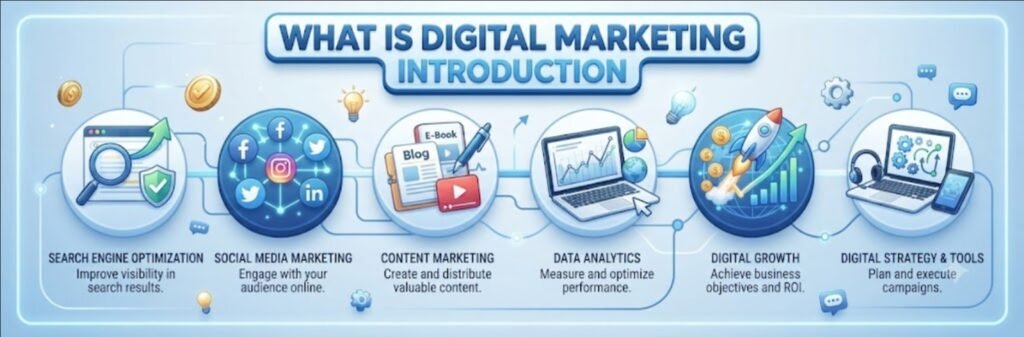
Digital marketing refers to promoting products, services, or brands through online channels. It allows businesses to connect with potential customers through search engines, social media platforms, websites, email, and online advertisements.
Unlike traditional marketing methods, digital marketing provides opportunities to reach specific audiences and measure the performance of campaigns using data and analytics.
For example, a local clothing store can use Instagram to display new collections, search engine optimization to attract people looking for clothing online, and paid advertisements to promote seasonal offers. A training institute can publish educational blogs, run online advertising campaigns, and collect enquiries through its website.
Digital marketing combines creativity, research, communication, and technology. Successful campaigns usually begin with understanding the target audience and setting clear objectives.
Major Types of Digital Marketing
1. Search Engine Optimization (SEO)
SEO involves improving a website and its content so that relevant pages can appear more prominently in organic search results. It includes keyword research, content optimization, technical improvements, internal linking, and building a useful website structure.
For example, a blog targeting the keyword “best digital marketing institute in India” should provide relevant information, use a clear structure, and answer the questions potential learners may have.
2. Social Media Marketing
Social media marketing helps brands communicate with their audiences through platforms such as Instagram, Facebook, LinkedIn, and YouTube. Activities may include publishing posts, creating short videos, responding to comments, and analysing engagement.
3. Content Marketing
Content marketing involves creating helpful and relevant material to attract and educate an audience. Common formats include blogs, articles, videos, infographics, guides, and newsletters.
Good content answers genuine questions instead of simply repeating promotional messages.
4. Search Engine Marketing and Paid Advertising
Paid advertising allows businesses to promote their products or services through platforms such as Google Ads and Meta Ads. Campaigns can be planned around specific objectives, including website visits, enquiries, sales, or brand awareness.
5. Email Marketing
Email marketing helps businesses communicate with subscribers through updates, newsletters, product information, and educational messages. It can also support customer relationships and encourage repeat purchases.
6. Website Development and Analytics
A website provides a central place where customers can learn about a business, explore its services, and make enquiries. Analytics tools help marketers understand visitor behaviour, traffic sources, and campaign performance.
Learning these areas together gives students a clearer picture of how different digital marketing activities support a common business goal.
Why Is Digital Marketing Education Important in India?
India has a large online audience, and businesses in different industries use digital channels to communicate with customers. From small local shops to large companies, organisations need ways to explain their offerings, build trust, and remain visible online.
This creates a reason for learners to develop digital marketing skills. However, completing a course alone does not guarantee a job or business success. Learners also need practice, communication skills, curiosity, and the ability to adapt to changing platforms.
1. Growing Importance of Online Business
Customers often search online before selecting a product, service, or training programme. A business with useful website content, an active social media presence, and clear contact information may find it easier to communicate with potential customers.
Digital marketing professionals help businesses plan and manage these activities.
2. Opportunities Across Different Industries
Digital marketing skills can be relevant to education, healthcare, retail, travel, technology, hospitality, and many other industries.
A marketer working with an educational institute may focus on course enquiries and informative content. Someone working with an online store may focus on product pages, advertising campaigns, and customer retention.
The basic principles remain similar, but the strategy changes according to the audience and business objectives.
3. Opportunities for Different Career Paths
Digital marketing knowledge can support several career directions, including SEO executive, content writer, social media executive, digital advertising specialist, email marketer, and marketing analyst.
Learners may also explore freelancing or support the marketing activities of their own businesses. These opportunities depend on practical ability, experience, market conditions, and individual effort.
4. The Need for Continuous Learning
Digital platforms and marketing tools change over time. Search engine guidelines, advertising features, analytics systems, and content formats may be updated.
A good learning programme should therefore help students understand fundamental principles rather than rely entirely on memorising individual tools or short-term techniques.
How to Choose the Best Online Digital Marketing Institute in India
Choosing an institute requires more than looking at advertisements or promotional rankings. Students should examine what a course teaches, how the classes are delivered, what practical activities are included, and what support is available.
The following factors can help learners make a more informed decision.
1. A Complete and Relevant Curriculum
A useful digital marketing course should cover the fundamentals as well as the practical skills needed to plan and evaluate campaigns.
Look for topics such as:
- Search engine optimization and keyword research
- Content writing and content strategy
- Social media marketing
- Google Ads and Meta Ads
- Email marketing
- Website development and WordPress
- Google Analytics and Search Console
- Reporting, campaign measurement, and conversion tracking
- The responsible use of AI tools in marketing
A broad curriculum can help students understand how different channels work together. Before enrolling, review the latest syllabus and confirm which topics are covered in sufficient detail.
2. Practical Assignments and Projects
Digital marketing is a skill-based field. Reading about keyword research is useful, but performing keyword research and applying the findings to a webpage provides a different kind of learning experience.
Practical assignments might include creating a blog post, optimising a webpage, designing social media content, preparing an advertising plan, or interpreting an analytics report.
These activities also help learners identify areas where they need further practice.
3. Clear Teaching and Mentor Support
Beginners may find technical terms, advertising dashboards, and analytics reports confusing at first. Instructors who explain concepts clearly and provide opportunities to ask questions can make the learning process easier.
Before selecting a course, check the teaching format, mentor availability, doubt-clearing arrangements, and opportunities to receive feedback.
4. Flexible Online Learning
Online learning can be useful for students and working professionals who cannot attend classes at a physical institute.
However, flexibility should not come at the expense of learning support. Check whether the course offers live classes, recorded lessons, assignments, a learning schedule, and access to instructors.
5. Portfolio Development
A portfolio is a collection of work that demonstrates what a learner can do. It may contain blog posts, keyword research documents, website projects, content calendars, campaign plans, and performance reports.
A strong portfolio can give potential employers or clients a clearer understanding of a learner’s practical abilities than a certificate alone.
6. Transparent Fees and Course Details
Before paying for any programme, understand the course fee, duration, syllabus, certificate requirements, available tools, refund policy, and any additional expenses.
If a course advertises internships or placement assistance, ask what those services include and whether eligibility conditions apply. Placement assistance should not be confused with a guaranteed job.
Considering these factors can help learners choose a programme that matches their goals, schedule, and budget.
Why Zinmatt Is Worth Considering for Online Digital Marketing Training
Zinmatt presents itself as a digital marketing learning platform that combines online instruction with practical activities. Its official website describes training in SEO, content writing, website development, social media marketing, advertising, analytics, email marketing, and AI-related applications.
For learners comparing online digital marketing institutes in India, the following features may be worth examining.
1. Training Across Multiple Digital Marketing Skills
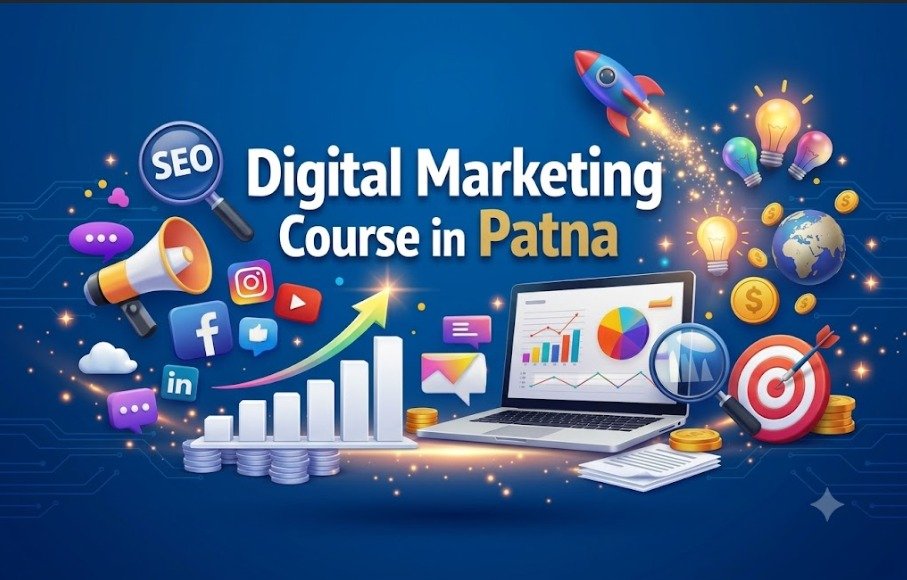
Digital marketing involves several connected activities. A marketer may need to understand how a website works, how to attract visitors through search engines, how to create useful content, and how to evaluate campaign results.
According to its official course page, Zinmatt’s programme includes subjects such as WordPress, SEO, content writing, email marketing, social media optimization, Meta Ads, Google Ads, Google Analytics, Google Search Console, and AI in digital marketing.
This range of subjects may help beginners understand how different marketing channels fit into a wider strategy.
For example, a learner could study how a blog attracts organic traffic, how social media supports content distribution, and how analytics helps measure visitor activity.
Students should review the current syllabus to confirm the depth of each module and the tools available in their selected programme.
2. Emphasis on Practical Learning
Zinmatt’s website highlights practical projects and applied learning alongside digital marketing concepts.
This approach is relevant because marketers need to do more than define terms. They should be able to research keywords, prepare content, understand website structure, plan campaigns, and interpret results.
A practical learning task might involve creating a small website, writing a search-focused blog post, preparing a social media calendar, or developing a campaign plan for a local business.
The value of these activities depends on how they are conducted, the quality of feedback, and the extent to which students complete the work themselves.
3. Online Accessibility for Learners Across India
An online programme can make digital marketing education accessible to people who live far from a training centre.
Students may be able to learn from home without relocating to another city. This can be helpful for learners managing college, work, family responsibilities, or other commitments.
Zinmatt describes its digital marketing course as an online programme. Prospective students should confirm the current class timings, language options, attendance requirements, and availability of recordings before joining.
4. Opportunities to Learn Website and Content Skills Together
A website is an important part of many digital marketing campaigns. Content and SEO also work closely together: useful content gives visitors information, while SEO helps search engines understand the page and its relevance.
Learning WordPress, content writing, and SEO together can help beginners understand this relationship.
For instance, a learner might create a website for a fictional bakery, write a page about its products, identify relevant search terms, and improve the page title and headings.
This exercise can connect several topics in one practical assignment.
5. Exposure to Advertising and Analytics
Paid campaigns need planning, monitoring, and evaluation. Marketers must understand the campaign objective, audience, budget, creative content, and measurement process.
Learning Google Ads and Meta Ads can introduce students to advertising concepts. Studying analytics can help them examine which sources bring visitors and whether those visitors take meaningful actions.
These skills are particularly useful when learners practise interpreting sample reports and explaining what the data means for a business.
6. Support for Career Preparation
Zinmatt’s official website describes career-support activities such as resume improvement, LinkedIn profile optimization, portfolio building, and mock interviews.
Such support may help learners prepare to present their skills more clearly when applying for opportunities.
However, the availability, terms, and extent of career assistance can vary by programme. Students should confirm these details directly with the institute and remember that hiring decisions depend on employers and individual performance.
7. Beginner-Friendly Learning
People entering digital marketing may come from commerce, arts, science, business, or other educational backgrounds. Many introductory digital marketing skills do not require advanced programming knowledge.
A well-structured course should explain essential concepts before moving to more complex tasks. Beginners can then gradually develop confidence through practice.
Zinmatt states on its website that its training is intended for beginners as well as other learner groups. Prospective students should review a demo class or speak with the course team to determine whether the teaching approach suits their current skill level.
What Can Students Learn in a Digital Marketing Course?
The exact syllabus varies by programme, but a well-rounded course may include the following learning areas.
Search Engine Optimization
Students can learn how search engines discover and understand webpages, how to research keywords, how to structure content, and how to identify common technical SEO issues.
A practical exercise could involve optimising a blog post with a clear title, useful headings, relevant internal links, and content that answers the reader’s search intent.
Content Writing
Content writing involves producing useful, readable material for websites, blogs, landing pages, emails, and social media.
Students should practise writing original content, organising information, checking facts, editing grammar, and adapting the tone for different audiences.
SEO should support the reader’s experience rather than lead to repetitive or unnatural keyword usage.
Social Media Marketing
Learners may study audience research, content planning, visual communication, engagement, and social media analytics.
A sample project could involve planning one week of social media content for a small business and explaining the purpose of each post.
Paid Advertising
Paid advertising training may introduce campaign objectives, audience targeting, ad formats, budgets, conversion tracking, and performance measurement.
Students should understand that advertising results are not guaranteed. Campaign performance depends on factors such as the offer, competition, targeting, creative quality, and available budget.
Website Development
Website training may cover WordPress basics, page structure, navigation, mobile responsiveness, and website content management.
This knowledge can help digital marketers collaborate more effectively with website developers or manage straightforward website updates themselves.
Analytics and Reporting
Analytics helps marketers move beyond assumptions. Learners can practise identifying traffic sources, monitoring important actions, comparing campaign performance, and presenting findings in simple reports.
For example, if a blog receives visitors but very few people click its enquiry link, a marketer might investigate whether the page answers the audience’s questions and whether the next step is clearly explained.
Who Should Consider Joining Zinmatt?
An online digital marketing course may be suitable for several types of learners.
Students and fresh graduates: Students can begin learning practical marketing concepts and explore potential career paths while developing a portfolio.
Job seekers: People preparing for digital marketing roles may use a structured course to build foundational skills and practise common tasks.
Working professionals: Professionals in sales, communications, business development, or related fields may find digital marketing knowledge useful for expanding their existing skill set.
Freelancers: Freelancers may learn how to offer services such as content writing, SEO, social media management, or website support, depending on their level of competence.
Business owners: Entrepreneurs can learn how online marketing channels work and make more informed decisions about their own business promotion.
Beginners exploring a new field: People without previous digital marketing experience may use an introductory programme to understand the subject before choosing a specialisation.
The best choice depends on a learner’s goals, schedule, budget, and preferred learning style.
How to Get the Most Out of an Online Digital Marketing Course
Enrolling in a course is only the first step. Learners need to apply what they study and keep improving their work.
1. Practise Every Week
Set aside time to complete assignments, explore marketing tools, and revise difficult topics. Regular practice helps turn unfamiliar concepts into usable skills.
2. Create Your Own Projects
Build sample projects around topics you understand. You could create a small informational website, prepare a blog content plan, or develop a social media strategy for a fictional business.
Clearly label practice work as sample work and do not present invented client results as real achievements.
3. Learn to Read Data
Practise explaining what metrics mean instead of focusing only on numbers. Website traffic, engagement, leads, and sales measure different outcomes, so choose metrics that match the objective.
4. Ask Questions and Use Feedback
When an assignment does not work as expected, identify the problem and ask for specific feedback. Learning why an approach failed can be as useful as learning why another approach succeeded.
5. Keep Learning After the Course
Digital marketing tools and platforms continue to evolve. Follow reliable documentation, review current best practices, and practise with new features when appropriate.
6. Build an Honest Portfolio
Save examples of your work and explain the objective, your approach, and what you learned. If you have real campaign data, share it only when you have permission and can protect confidential information.
Zinmatt vs. Other Online Digital Marketing Institutes: What Should You Compare?
No single institute is automatically the best fit for every student. Instead of relying only on promotional claims, compare programmes using clear criteria.
| Factor | What to Check |
| Curriculum | Are SEO, content, social media, advertising, and analytics covered? |
| Teaching format | Are classes live, recorded, or a combination? |
| Practical work | Are there meaningful assignments and projects? |
| Mentor support | Can students ask questions and receive feedback? |
| Portfolio | Will students create work they can show to employers or clients? |
| Career support | What resume, interview, internship, or placement services are included? |
| Cost | Are fees and additional expenses clearly explained? |
| Schedule | Do class timings and course duration fit your routine? |
| Certification | Who issues the certificate, and what are the completion requirements? |
| Student feedback | Are recent reviews credible, detailed, and relevant to the selected programme? |
Zinmatt can be included in this comparison because its official website describes a broad digital marketing curriculum and practical learning activities. Other institutes should be assessed using the same criteria.
Before making a final decision, review the course syllabus, request details about projects and support, and attend a demo class if one is available. Check recent independent student feedback rather than relying entirely on testimonials published by a provider.
This process helps you decide whether Zinmatt matches your needs without assuming that one course will suit every learner.
A well-rounded course may include SEO, content marketing, social media
Conclusion
Digital marketing has become an important part of how businesses communicate with customers, promote their services, and develop their online presence. Learning the fundamentals can help students, job seekers, professionals, freelancers, and entrepreneurs explore different ways to work with digital channels.
However, selecting the right course requires careful research. Students should look beyond attractive advertisements and consider curriculum quality, practical assignments, instructor support, project opportunities, fees, and career preparation.
Zinmatt is worth considering for learners searching for the best online digital marketing institute in India, especially those interested in a broad curriculum covering SEO, content writing, social media marketing, paid advertising, website development, and analytics. Its official website also highlights practical projects and career-preparation support.
Ultimately, the right institute is one that matches your individual goals and gives you opportunities to apply what you learn. A course can provide structure and guidance, but consistent practice, independent learning, and honest portfolio development remain important for long-term progress.
If you are ready to explore digital marketing, review Zinmatt’s current course details, compare them with your requirements, and decide whether its learning format is right for you.
Call to Action: Start Your Digital Marketing Learning Journey
Want to develop practical digital marketing skills and understand how online businesses attract and engage customers?
Explore the official Zinmatt website to review the available programmes, syllabus, teaching format, and course requirements. You can also ask about a demo class and the practical projects included in your chosen course.
Take the first step today: choose a learning programme that fits your goals, practise consistently, and start building your digital marketing knowledge one skill at a time.
Frequently Asked Questions (FAQ’s)
1. Which is the best online digital marketing institute in India?
The best institute depends on your learning goals, budget, preferred teaching format, syllabus, and need for practical support. Zinmatt is one option worth evaluating because its official website describes training across multiple digital marketing subjects, including SEO, content writing, advertising, and analytics.
2. Can beginners learn digital marketing online?
Yes. Beginners can start with the fundamentals and gradually learn more advanced topics. A structured syllabus, regular practice, clear explanations, and feedback can make the learning process easier.
3. What skills should a digital marketing course teach?
arketing, paid advertising, email marketing, website basics, analytics, and campaign reporting. The exact combination should match the learner’s goals.
4. Is a digital marketing certificate enough to get a job?
A certificate can document course completion, but it does not guarantee employment. Employers may also consider practical skills, communication, relevant experience, portfolio quality, and performance during interviews.
5. Can I learn digital marketing from home?
Online courses make it possible to study many digital marketing topics from home. Before enrolling, confirm whether the course offers live classes, recordings, assignments, and access to instructors.
6. Does Zinmatt provide practical digital marketing training?
Zinmatt’s official website describes practical projects and applied learning as part of its training approach. Prospective learners should check the current syllabus and confirm which hands-on activities are included in the particular course they want to join.